Zanshi
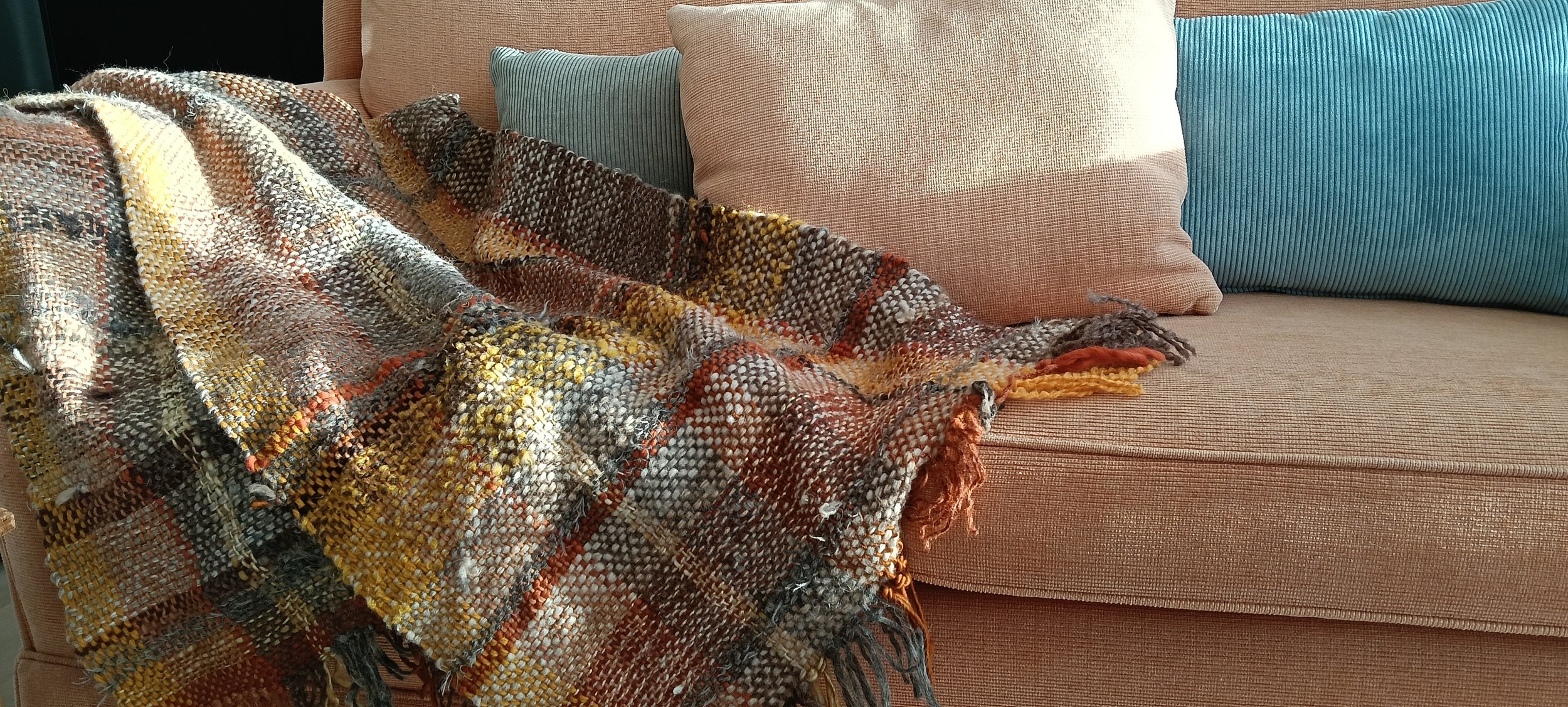
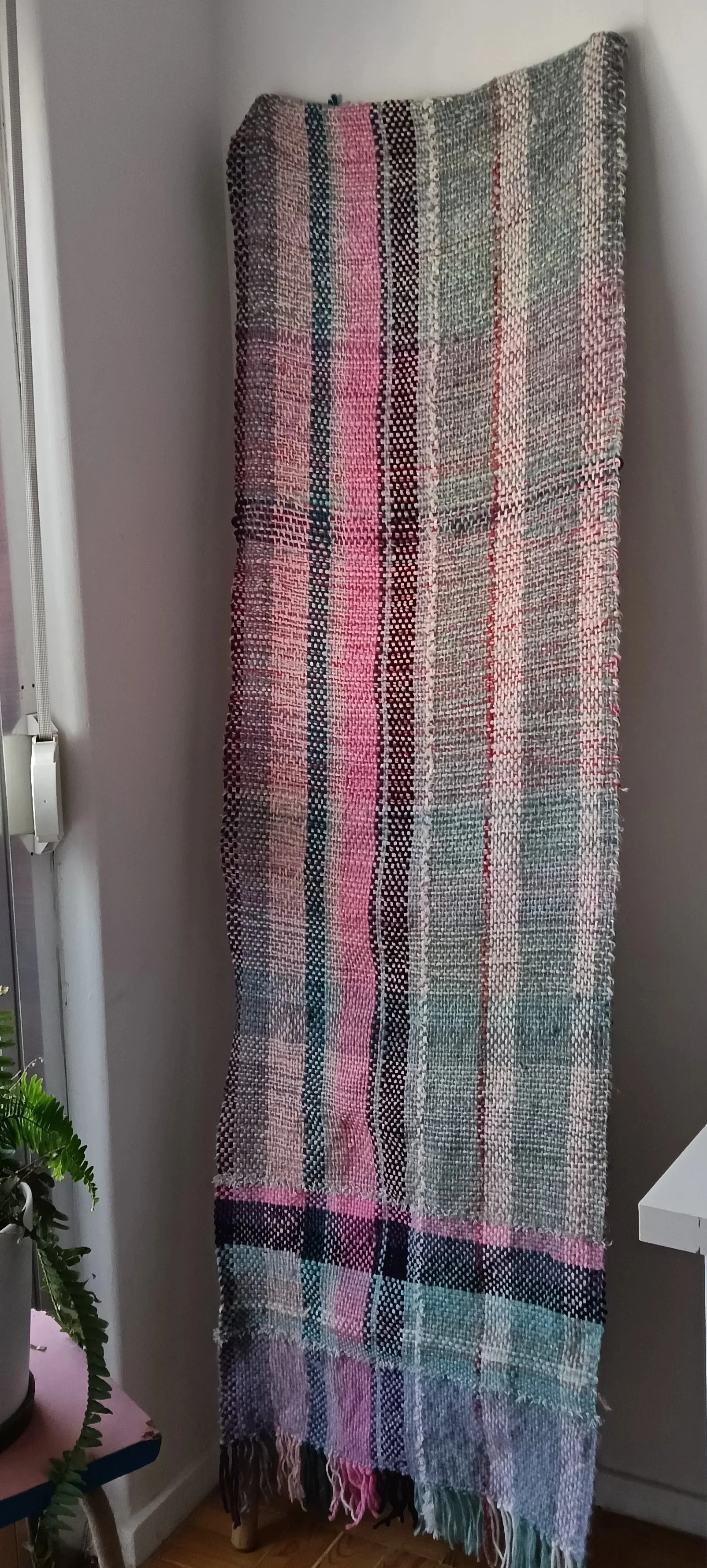
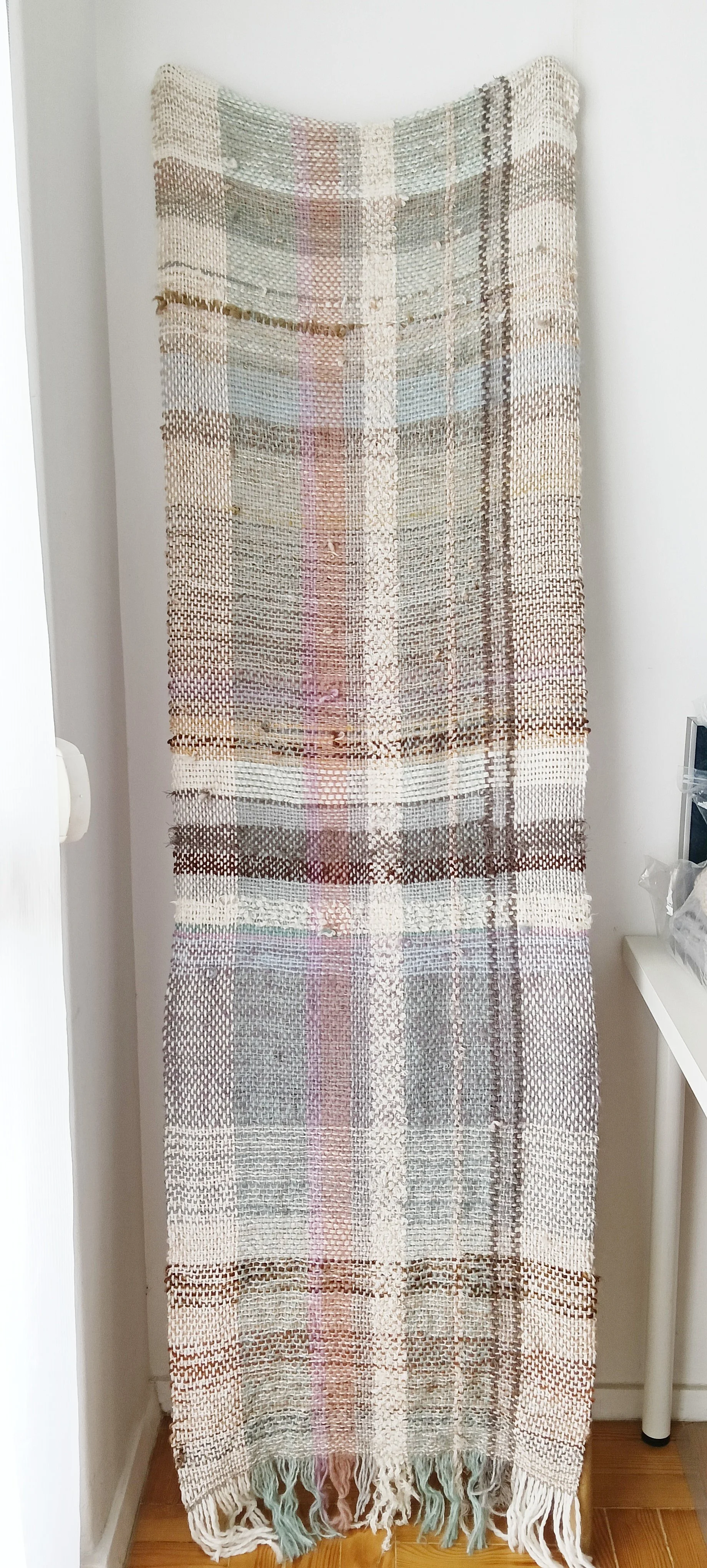
"Zanshi" is a traditional Japanese weaving technique that involves tying leftover or scrap yarn (called zanshi, meaning "leftovers") together to create a continuous thread, which is then used primarily as the weft (horizontal threads) in a new weaving project. This method is a form of recycling to prevent waste and create unique, rustic fabrics.
Materials: catalogue threads, warp ends leftover on the loom), broken threads, and other small lengths of scrap yarn.
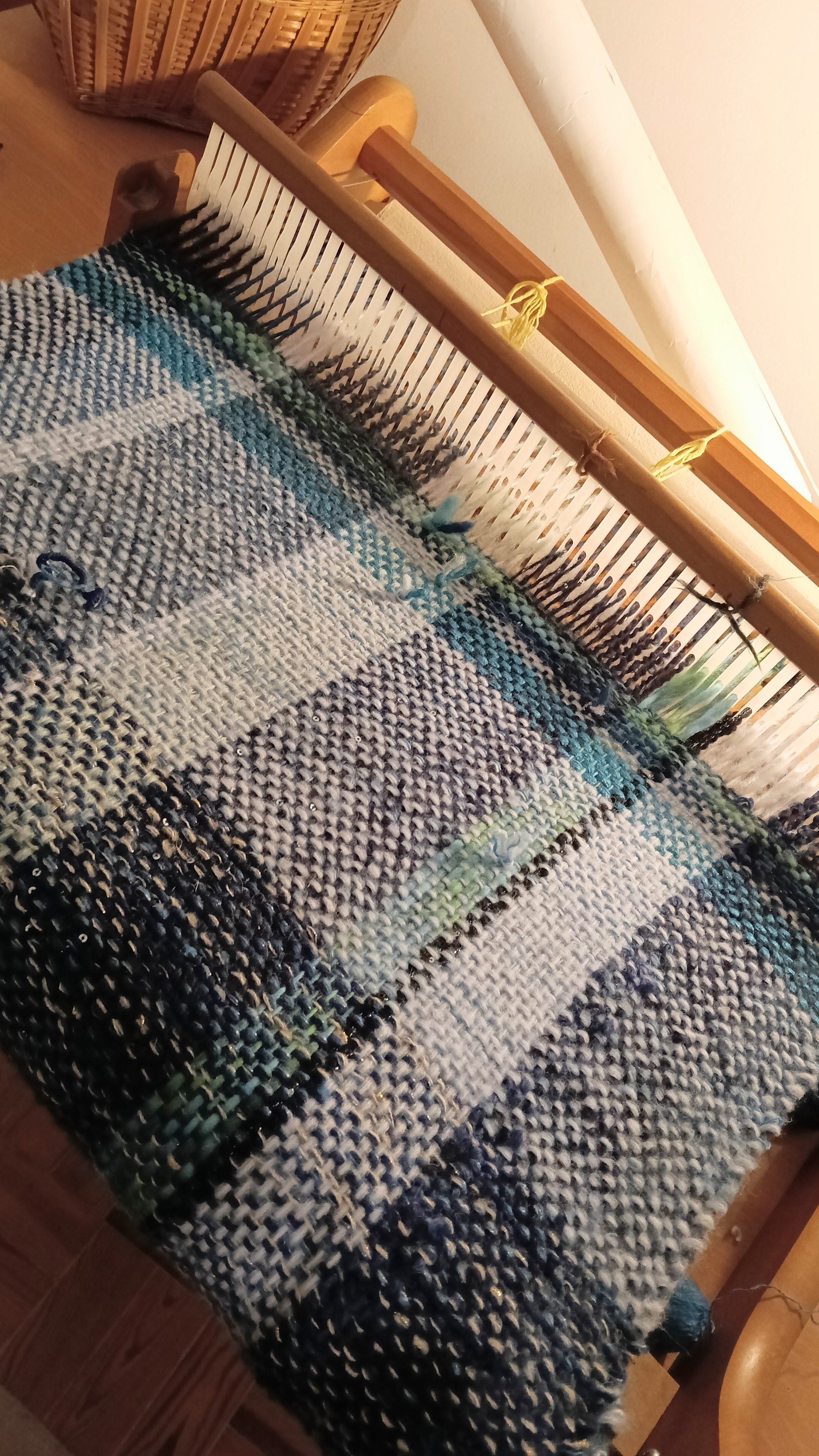
Technique: Small pieces of yarn are knotted together, using simple knots like a granny knot (box knot), to form one long, continuous strand. The resulting knots and the deliberately long tails add a bumpy, slubby, and textured appearance to the fabric.
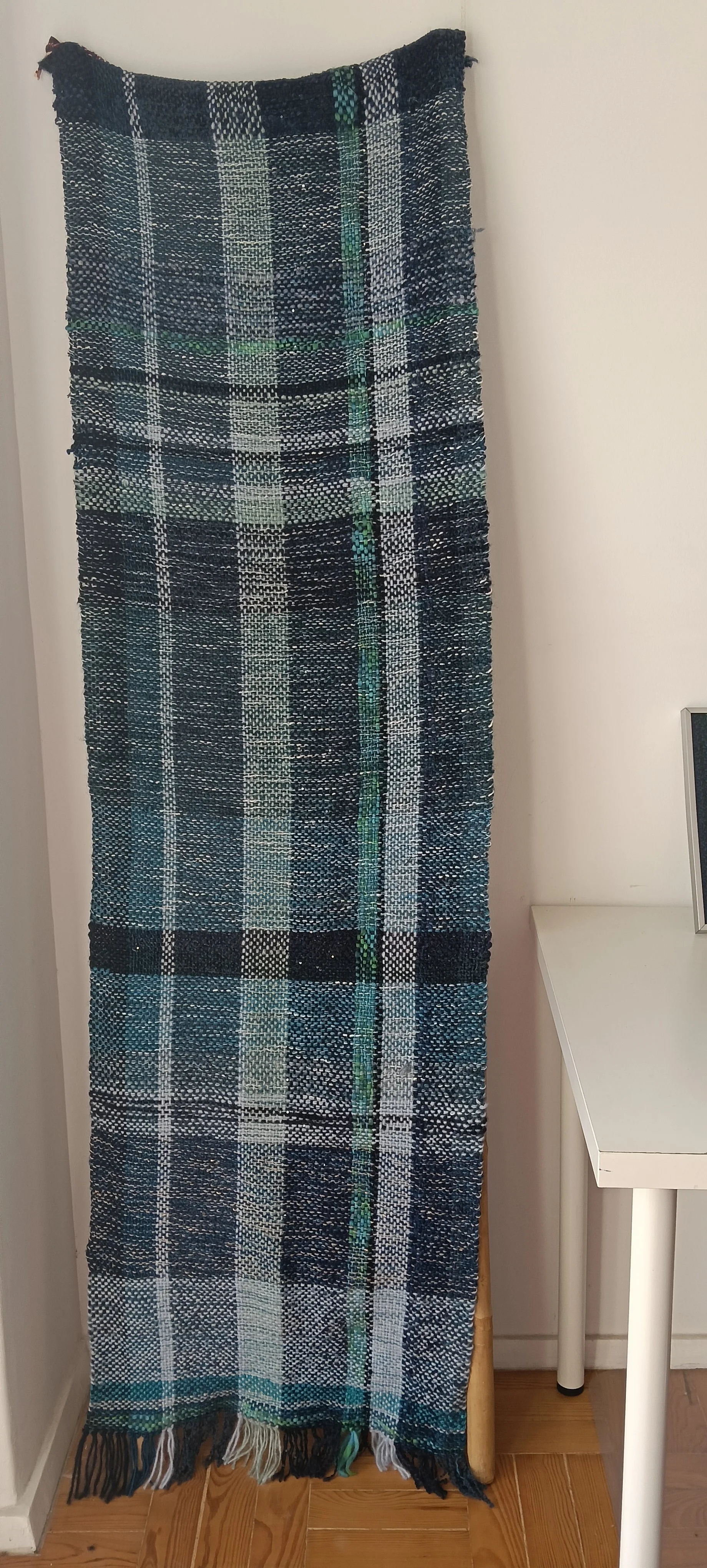
Aesthetic: The resulting fabric has a random, often striped, appearance due to the unpredictable color changes, which is a key part of its appeal. This "get-going-on weaving" style (also called jaja ori or yatara ori) allows for creative freedom as the weaver does not need to align specific patterns.